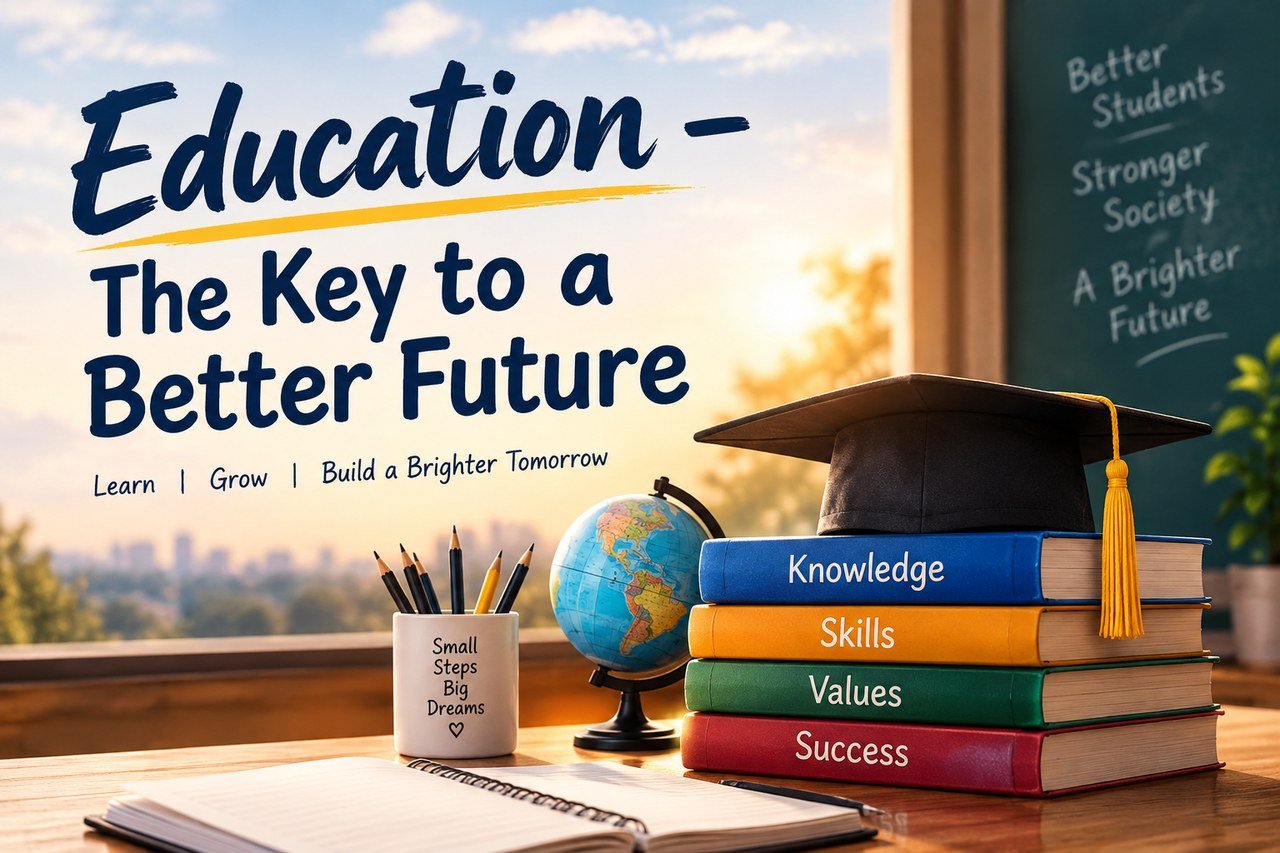
Education is the foundation of individual growth and societal progress. It equips people with knowledge, critical thinking, and practical skills, paving the way for personal development and broader economic stability.
Key Impacts of Education
Personal Development: Fosters critical thinking, problem-solving, and emotional maturity, enabling individuals to navigate daily life and make informed decisions.
Economic Growth: Opens up career opportunities, increases earning potential, and drives innovation within workforce markets.
Social Equality: Helps reduce poverty and bridges social gaps by providing equal opportunities regardless of background.
Community Improvement: Encourages active citizenship, promotes public health awareness, and supports stable, informed communities.
Education is the single most powerful catalyst for personal growth, economic mobility, and societal transformation. It functions as both a fundamental human right and the bedrock upon which stable, prosperous civilizations are built. Beyond the acquisition of literacy and numeracy, education shapes how individuals perceive the world, solve complex problems, and interact within their communities.
1. The Core Purpose of Education
Education fundamentally alters human potential by expanding cognitive capability, emotional intelligence, and technical literacy.
* Cognitive Development and Critical Thinking: Education trains the brain to process information critically rather than accept it passively. It fosters analytical skills, logical reasoning, and evidence-based evaluation, allowing individuals to navigate an increasingly complex world filled with competing narratives and information overload.
* Character and Value Formation: Schools and learning environments serve as primary micro-societies. Through collaborative learning and structured discipline, individuals develop empathy, moral reasoning, social responsibility, and cultural awareness.
* Empowerment and Autonomy: Knowledge grants self-reliance. Educated individuals are better equipped to make informed choices regarding their health, finances, civic duties, and personal well-being.
2. Economic Impact: Personal Prosperity and Global Growth
The economic dividend of education is well-documented across every level of development, directly correlating with poverty reduction and macroeconomic stability.
| Impact Dimension | Individual Level | National / Global Level |
|---|---|---|
| Income Potential | Higher earning capacity; significantly lower unemployment risk. | Increased tax revenues, higher GDP growth rates, and reduced reliance on social welfare systems. |
| Innovation & Productivity | Enhanced skill acquisition enabling transition into high-growth sectors. | Faster technological adoption, increased R&D capability, and high market competitiveness. |
| Poverty Alleviation | Breaks intergenerational poverty cycles by providing upward mobility pathways. | Reduces wealth inequality gaps and drives long-term structural economic development. |
3. Social and Health Outcomes
The systemic benefits of education extend far beyond payroll statistics, directly improving physical health, public safety, and democratic engagement.
* Health and Life Expectancy: Higher literacy rates directly correlate with better health outcomes. Educated individuals are more likely to understand preventive care, navigate healthcare systems effectively, maintain healthier lifestyles, and experience lower infant mortality rates.
* Gender Equality and Female Empowerment: Educating girls is recognized as one of the most effective levers for global development. Educated women tend to marry later, have healthier children, participate more active in the labor force, and reinvest up to 90% of their income back into their families and communities.
* Democracy and Civic Participation: An informed electorate is mandatory for healthy democratic institutions. Education fosters civic awareness, increases voter turnout, promotes institutional accountability, and reduces susceptibility to political radicalization or disinformation.
4. Modern Challenges Facing Global Education Systems
Despite universal recognition of its importance, global educational access and quality remain uneven, hindered by systemic barriers and rapid technological shifts.
* The Educational Inequality Gap: Socioeconomic status, geography, and gender continue to dictate access to quality education. Millions of children globally still lack basic primary literacy, while students in underfunded public systems struggle with inadequate resources.
* The Digital Divide: As education shifts toward digital platforms, unequal access to high-speed internet, modern hardware, and digital literacy training creates a growing divide between privileged and marginalized students.
* Curriculum Obsolescence: Traditional models emphasizing rote memorization struggle to prepare students for modern workforce demands. Today's economy requires adaptable skills—such as complex problem-solving, digital literacy, and creative thinking—that legacy systems often fail to teach.
5. The Future of Education: Adaptability in the 21st Century
To remain impactful, the future of learning must pivot from rigid instructional models to dynamic, lifelong frameworks.
* Lifelong Learning Culture: The era of a single university degree powering a 40-year career is over. Rapid automation and AI advancement mean workers must continuously upskill and reskill throughout their professional lives.
* Personalized and Flexible Instruction: Adaptive learning technologies allow education to conform to individual student speeds, learning styles, and interests, replacing one-size-fits-all instruction.
* Focus on Human-Centric Skills: As machine learning handles routine tasks, education must double down on uniquely human attributes: emotional intelligence, ethics, cross-cultural collaboration, and strategic creativity.
Investing in education yields compound interest across generations. By modernizing curricula, bridging digital divides, and ensuring equitable access, society secures not only economic progress, but a resilient, thoughtfu
l, and capable human future.
Education is not the learning of facts, but the training of the mind to think." — Albert Einstein
True education goes far beyond degrees and textbooks—it transforms how you process the world around you.
Cultivates Curiosity: It teaches you how to think, not what to think, turning passive observation into active inquiry.
Builds Resilience: Learning requires making mistakes, instilling the patience and adaptability needed to solve real-world problems.
Unlocks Potential: It acts as an equalizer, granting you the tools to shape your own future rather than merely accepting the one you were given.
Education provides formal, structured knowledge through instruction, while life experience provides practical, intuitive wisdom learned through real-world actions and consequences.
Source of Learning: Education is acquired in structured environments like schools, books, and courses; life is learned through personal experiences, choices, mistakes, and relationships.
Timeline: Formal education usually occurs during specific years of training or schooling; life experience is an ongoing process from birth to death.
Assessment Method: Education tests your knowledge with exams before teaching you a lesson; life gives you the test first and teaches you the lesson afterward.
Scope & Focus: Education focuses on specialized skills, theory, and cognitive abilities; life builds emotional intelligence, resilience, adaptability, and character.
Validation: Education yields recognized qualifications like degrees and certificates; life yields personal judgment, maturity, and perspective
"Your mind is a garden, and your thoughts are the seeds; you can grow flowers, or you can grow weeds."
The Architecture of the Mind
Every day, the average person processes tens of thousands of thoughts. These thoughts form the unseen foundation of our reality, dictating our emotions, our decisions, and ultimately our character. To cultivate good thoughts is not to practice toxic positivity—it is not about ignoring life's hardships, pain, or challenges. Rather, it is the intentional choice to anchor your perspective in hope, constructive action, integrity, and gratitude.
When you train your mind to focus on wholesome and uplifting thoughts, you reframe how you experience the world. Obstacles transform into opportunities for growth, setbacks become valuable lessons, and everyday moments reveal subtle beauty. The following collection of good thoughts explores the key pillars of a meaningful life: personal growth, resilience, kindness, inner peace, and purpose.
On Personal Growth and Self-Mastery
The Journey of a Thousand Miles Starts Within: Real transformation rarely begins with a massive external shift. It starts quietly, in the hidden corridors of your mind, with a single decision to think better, act with greater intention, and hold yourself to a higher standard.
Embrace the Power of "Yet": When faced with a skill you haven't mastered or a goal you haven't reached, replace "I can't do this" with "I can't do this yet." This simple shift in language moves your brain from a fixed mindset to a growth mindset, opening the door to endless potential.
Compare Yourself Only to Who You Were Yesterday: Social media and societal expectations often push us to measure our behind-the-scenes reality against everyone else's highlight reels. True peace comes when you realize your only real competition is the person you were yesterday.
Small Daily Habits Yield Compound Results: Great achievements are seldom the result of sudden, dramatic effort. They are built through quiet, continuous micro-wins. Dedicating just fifteen minutes a day to a worthy pursuit adds up to over ninety hours of focused progress in a year.
On Resilience and Overcoming Adversity
Storms Make Oaks Take Deeper Root: Smooth seas never made a skilled sailor. When life hits you with unexpected challenges, remind yourself that difficulty is the fire that tempers strength. You are not being broken; you are being built.
Focus Entirely on Your Circle of Control: You cannot control the weather, the economy, or the behavior of other people. You can, however, completely control your reactions, your attitude, and your effort. Discard energy spent on the uncontrollable, and invest it entirely where your influence lies.
Failure is Feedback, Not Identity: Making a mistake or failing at a task does not make you a failure. It simply provides clear, actionable data on what doesn't work so that you can approach the problem smarter the next time.
This Too Shall Pass: Neither the brightest days nor the darkest nights last forever. Recognizing the transient nature of all experiences brings humility during moments of success and profound comfort during times of hardship.
On Kindness, Connection, and Community
Kindness is a Currency That Never Devalues: A simple word of encouragement, an attentive ear, or a warm smile costs nothing to give, yet its value to the recipient can be immeasurable. You never truly know what heavy burdens another person is silently carrying.
In a World Where You Can Be Anything, Be Kind: Intelligence, talent, and ambition are wonderful traits, but without empathy and compassion, they lose their brilliance. Character is best revealed by how you treat those who can do nothing for you.
Forgiveness is a Gift to Yourself: Holding onto anger, resentment, or past grievances is like drinking poison and expecting the other person to suffer. Forgiveness isn't about excusing someone else's bad behavior; it is about freeing your own heart from a heavy weight.
Lift Others as You Climb: True success is not measured solely by how high you reach, but by how many people you bring up along the way. Generosity of spirit creates a ripple effect that extends far beyond your immediate vision.
On Gratitude and Inner Peace
Gratitude Turns What We Have Into Enough: It is easy to live in a state of perpetual lack, always chasing the next milestone, purchase, or achievement. Gratitude interrupts this cycle by shining a spotlight on the abundance that already exists in your present life.
Peace Begins the Moment You Let Go of What Should Be: Much of our emotional suffering stems from demanding that reality conform to our personal expectations. Accepting the present moment as it is provides the quiet, stable platform required to work toward a better future.
Silence is the Soil of Wisdom: In a noisy, fast-paced world constantly competing for your attention, solitude is essential. Carve out daily moments of quiet stillness to listen to your inner voice, declutter your mind, and restore your spirit.
Joy is Found in the Unremarkable: Do not wait for major extraordinary events to feel happy. The warmth of a morning beverage, the sound of rain against a window, a shared laugh with a friend—these quiet everyday moments make up the real richness of existence.
The Continuous Practice of Good Thoughts
Mindfulness and positive thinking are not static destinations; they are ongoing daily practices. Just as physical strength requires consistent workout routines, mental clarity and emotional strength require continuous conditioning. When negative or destructive thoughts inevitably creep in, acknowledge them without judgment, let them pass through like clouds in the sky, and intentionally redirect your focus back toward light, purpose, and constructive action.
Fill your mind with noble ideas, nourish your soul with kindness, and trust that the good thoughts you plant today will bloom into a deeply fulfilling tomorrow.
Every small choice made today quietly shapes the reality of tomorrow. Cultivating positive habits, continuous learning, and purposeful action now builds a strong foundation for a fulfilling, successful future.
Thanks 😊