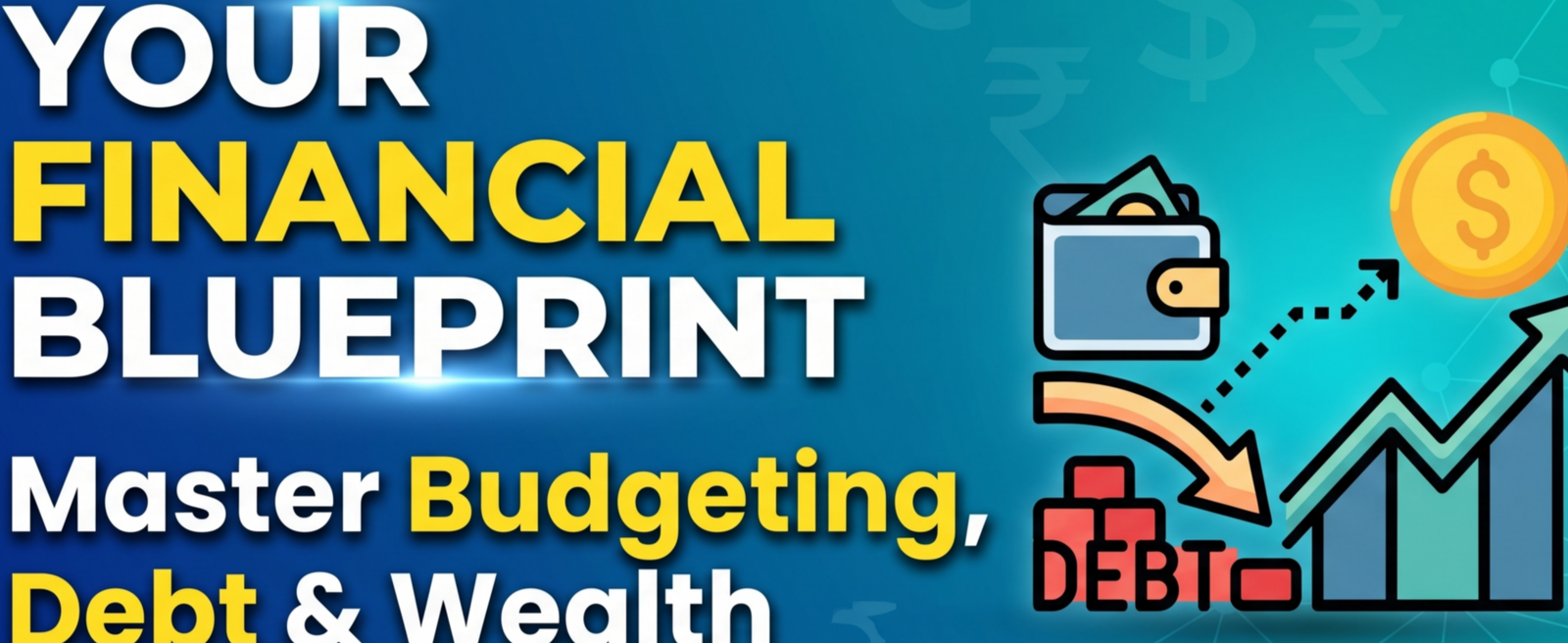
Indian Finance Guide 2026: Money Management, Saving, Investment, SIP, Loans & Tax Planning
Managing money properly is one of the most important skills in modern life. In India, people are becoming increasingly interested in saving, investing, budgeting, loans, insurance, tax planning, and retirement planning. However, many people still find financial planning confusing because there are so many options available.
Whether you are a student, salaried employee, business owner, freelancer, homemaker, or young professional, understanding basic personal finance can help you make better decisions.
You do not need to be a financial expert to start. A simple financial plan can begin with understanding your income, controlling expenses, building savings, managing debt, and gradually investing for your future.
This complete Indian finance guide explains the important areas of personal finance, including budgeting, savings, SIPs, mutual funds, loans, credit scores, taxes, and retirement planning.
What Is Personal Finance?
Personal finance means managing your money and financial decisions.
It includes:
-
Income management
-
Monthly budgeting
-
Saving money
-
Emergency funds
-
Investments
-
Loans and debt
-
Insurance
-
Tax planning
-
Retirement planning
-
Financial goals
Good personal finance is not necessarily about earning a very high salary. Someone earning a moderate income can build strong financial habits by controlling expenses and saving consistently.
The main objective is to make your money work according to your personal goals.
1. Start With a Monthly Budget
A budget is the foundation of financial planning.
Before investing or taking a new loan, understand how much money comes into your account and where it goes every month.
Create categories such as:
-
Rent or home expenses
-
Food and groceries
-
Electricity and utility bills
-
Transportation
-
Education
-
Healthcare
-
Insurance
-
Shopping
-
Entertainment
-
EMIs
-
Savings
-
Investments
For example, if your monthly income is ₹50,000, you should know approximately how much is spent on essential expenses and how much remains for savings and investments.
Budgeting also helps identify unnecessary expenses.
Small expenses may look insignificant individually, but frequent spending on food delivery, shopping, subscriptions, entertainment, and impulse purchases can become a significant monthly amount.
2. Build an Emergency Fund
An emergency fund is money kept aside for unexpected situations.
Unexpected expenses can include:
-
Medical emergencies
-
Job loss
-
Vehicle repairs
-
Home repairs
-
Family emergencies
-
Sudden travel
-
Temporary income reduction
Without emergency savings, people may have to use credit cards or take personal loans when an unexpected expense occurs.
A common approach is to build an emergency fund covering several months of essential expenses.
For example, if your essential monthly expenses are ₹30,000, you might gradually work toward building a fund that can cover multiple months.
You do not need to build it in one month. Start with a small amount and increase your savings over time.
Keep emergency money somewhere relatively accessible rather than putting all of it into investments that may fluctuate in value.
3. Saving Money Every Month
Saving should become a regular financial habit.
Instead of waiting until the end of the month to see what money is left, consider treating savings as an important part of your monthly plan.
For example:
Income → Essential expenses → Savings → Investments → Lifestyle expenses
The exact order and percentages can vary depending on your circumstances.
You can create separate goals for:
-
Emergency savings
-
Travel
-
Education
-
Home purchase
-
Vehicle purchase
-
Family requirements
-
Business
-
Retirement
Specific goals make saving easier because you know exactly what you are working toward.
4. Understanding SIP Investment
SIP, or Systematic Investment Plan, is a popular way of investing regularly in mutual funds.
Instead of investing a large amount at one time, an investor can invest a fixed amount periodically, subject to the scheme and platform's terms.
For example, someone might choose to invest ₹1,000, ₹5,000, or ₹10,000 regularly.
The major benefit of regular investing is that it encourages financial discipline.
However, SIP is not a guaranteed-return product. Mutual fund investments are subject to market risks, and returns can fluctuate.
Before investing, understand the fund, its objective, risk level, fees, and your own financial goals.
5. Mutual Funds in India
Mutual funds collect money from investors and invest it according to the fund's investment objective.
There are different categories of mutual funds, including equity, debt, hybrid, and other specialized categories.
Equity-oriented investments can offer higher long-term growth potential but can also experience significant market fluctuations.
Debt-oriented investments may have different risk and return characteristics.
The right investment depends on factors such as:
-
Financial goals
-
Investment period
-
Risk tolerance
-
Income
-
Existing investments
-
Liquidity requirements
Do not choose an investment simply because someone says it generated high returns in the past.
Past performance does not guarantee future results.
6. Stock Market Basics
The Indian stock market provides opportunities for investors to participate in companies through shares.
Before buying individual stocks, beginners should understand:
-
Company fundamentals
-
Revenue and profits
-
Valuation
-
Debt
-
Business model
-
Industry conditions
-
Market risk
-
Diversification
Stock prices can rise and fall significantly.
New investors should avoid making decisions based only on social media recommendations, rumours, or short-term price movements.
Investing should be based on research and a clear understanding of your risk capacity.
7. Credit Score and Credit Cards
Your credit history can be important when applying for certain loans and financial products.
In India, credit information is maintained by credit bureaus, and credit scores are used by lenders as one factor in assessing creditworthiness.
Responsible credit-card usage can help develop a positive credit history.
Important habits include:
-
Paying bills on time
-
Avoiding unnecessary borrowing
-
Keeping credit utilization under control
-
Reviewing credit reports
-
Avoiding multiple unnecessary credit applications
A credit card should not be treated as extra income.
If you cannot comfortably repay the amount you spend, the interest charges can become expensive.
8. Personal Loans and EMIs
Personal loans can provide access to funds without requiring the same type of collateral as some secured loans, but interest rates and eligibility vary between lenders.
Before taking a personal loan, compare:
-
Interest rate
-
Processing fees
-
Tenure
-
EMI
-
Prepayment conditions
-
Total repayment amount
-
Other charges
Do not focus only on the monthly EMI.
A longer tenure may reduce the monthly payment while increasing the total interest paid over the life of the loan.
Use borrowing carefully and only when the repayment fits comfortably within your budget.
9. Home Loans
Buying a home is a major financial decision for many Indian families.
Before taking a home loan, consider:
-
Down payment
-
Loan amount
-
Interest rate
-
Loan tenure
-
EMI
-
Processing charges
-
Insurance
-
Registration and other property costs
-
Maintenance expenses
Do not decide on a property solely based on how much loan a bank is willing to provide.
Your affordable home budget should be based on your income, existing obligations, emergency savings, and long-term financial goals.
10. Tax Planning in India
Tax planning is another important part of personal finance.
India's tax system includes different rules, deductions, exemptions, rates, and regimes, and these can change over time.
Taxpayers should understand their applicable income-tax rules and maintain proper records.
Depending on your circumstances, relevant areas may include:
-
Salary income
-
Business income
-
Capital gains
-
Interest income
-
Eligible deductions
-
Tax-saving investments
-
Health insurance
-
Home-loan-related provisions
Tax rules can be complicated and may change with government budgets and legislation.
For complicated situations, consider consulting a qualified tax professional rather than relying only on online calculators or social-media advice.
11. Insurance Is Part of Financial Planning
Insurance is designed to protect against specific financial risks.
Important categories may include:
-
Health insurance
-
Life insurance
-
Motor insurance
-
Home insurance
-
Business insurance
Health emergencies can create large expenses, so appropriate health insurance can be an important part of financial planning.
Life insurance can be particularly relevant for people who have dependents and financial responsibilities.
Insurance should primarily be evaluated based on the protection it provides rather than treating every policy as an investment product.
12. Retirement Planning
Retirement planning should begin as early as practical.
Many people focus on today's expenses and postpone retirement planning until later. However, starting earlier can give your investments more time to potentially grow.
Retirement planning may involve:
-
EPF
-
PPF
-
NPS
-
Mutual funds
-
Other investments
-
Pension-related products
The appropriate combination depends on your income, age, financial goals, risk tolerance, and tax situation.
Think about the lifestyle you would like during retirement and estimate the future expenses you may need to support.
Inflation is particularly important because the cost of goods and services generally changes over time.
13. Financial Planning for Young Indians
Young professionals have an important advantage: time.
Instead of immediately increasing lifestyle expenses after receiving a salary increase, consider increasing savings and investments as well.
A simple strategy could include:
-
Create a monthly budget.
-
Build an emergency fund.
-
Pay high-interest debt responsibly.
-
Obtain appropriate insurance.
-
Start investing according to your goals.
-
Increase investments as income grows.
-
Review your financial plan regularly.
The goal is not to stop enjoying life. The goal is to balance today's lifestyle with tomorrow's financial security.
14. Common Financial Mistakes to Avoid
Many financial problems come from small decisions repeated over time.
Common mistakes include:
Spending More Than You Earn
If expenses consistently exceed income, debt can increase rapidly.
Ignoring Emergency Savings
Without an emergency fund, unexpected expenses may become expensive debt.
Investing Without Understanding
Never invest simply because a friend, influencer, or social-media account recommends something.
Taking Too Many Loans
Multiple EMIs can reduce monthly financial flexibility.
Ignoring Insurance
An unexpected medical or family emergency can have a major financial impact.
Delaying Retirement Planning
Starting late may require significantly higher contributions to reach the same long-term goal.
Chasing Quick Returns
Promises of guaranteed high returns should be treated with extreme caution.
15. Useful Finance Calculators
Finance calculators can make financial planning easier.
Some useful calculator categories include:
-
SIP Calculator
-
EMI Calculator
-
Loan Calculator
-
Home Loan Calculator
-
Personal Loan Calculator
-
FD Calculator
-
RD Calculator
-
PPF Calculator
-
GST Calculator
-
Income Tax Calculator
-
Salary Calculator
-
Retirement Calculator
-
Compound Interest Calculator
-
Investment Calculator
These tools can help you understand estimated payments, returns, savings targets, and financial scenarios.
However, calculator results are estimates based on the information and assumptions entered. Actual financial outcomes may differ.
16. How to Create a Simple Financial Plan
You can begin with five basic steps.
Step 1: Calculate Your Income
List your monthly salary, business income, freelance income, and other regular sources.
Step 2: Track Your Expenses
Record essential and non-essential expenses.
Step 3: Build Emergency Savings
Start creating a financial safety net.
Step 4: Set Financial Goals
Create short-term, medium-term, and long-term goals.
Step 5: Invest According to Your Goals
Choose financial products based on your time horizon and risk tolerance rather than trends.
Review your plan regularly and adjust it when your income, expenses, family responsibilities, or goals change.
Frequently Asked Questions
What is the best way to start personal finance in India?
Start by tracking your income and expenses. Then create a budget, build emergency savings, manage debt, and gradually begin investing according to your financial goals.
How much should I save every month?
There is no single percentage that works for everyone. Your savings target should depend on income, expenses, debt, family responsibilities, and financial goals.
Is SIP safe?
SIP is an investment method, not a guarantee of returns. If the SIP invests in mutual funds, the underlying investment can rise or fall depending on market conditions.
Which is better, saving or investing?
Both are important. Savings provide liquidity and financial security, while investing can help pursue long-term growth. The right balance depends on your goals and financial situation.
Should beginners invest in stocks?
Beginners should first understand how the stock market works, learn about risk, and invest only after considering their financial situation and investment goals.
Why is an emergency fund important?
An emergency fund helps cover unexpected expenses without immediately relying on credit cards or loans.
Conclusion
Personal finance in India is not only about earning more money. It is about making smart decisions with the money you already have.
A strong financial foundation can start with simple habits: create a budget, control unnecessary expenses, build an emergency fund, manage loans responsibly, protect yourself with appropriate insurance, and invest according to your long-term goals.
SIP, mutual funds, stocks, PPF, NPS, fixed deposits, and other financial products can all have different roles, but no single product is suitable for everyone.
The most important step is to understand your own financial situation and make decisions based on your goals, time horizon, and risk tolerance.
Start small, remain consistent, continue learning, and review your financial plan regularly. Over time, these habits can help you build greater financial confidence and work toward a more secure financial future.