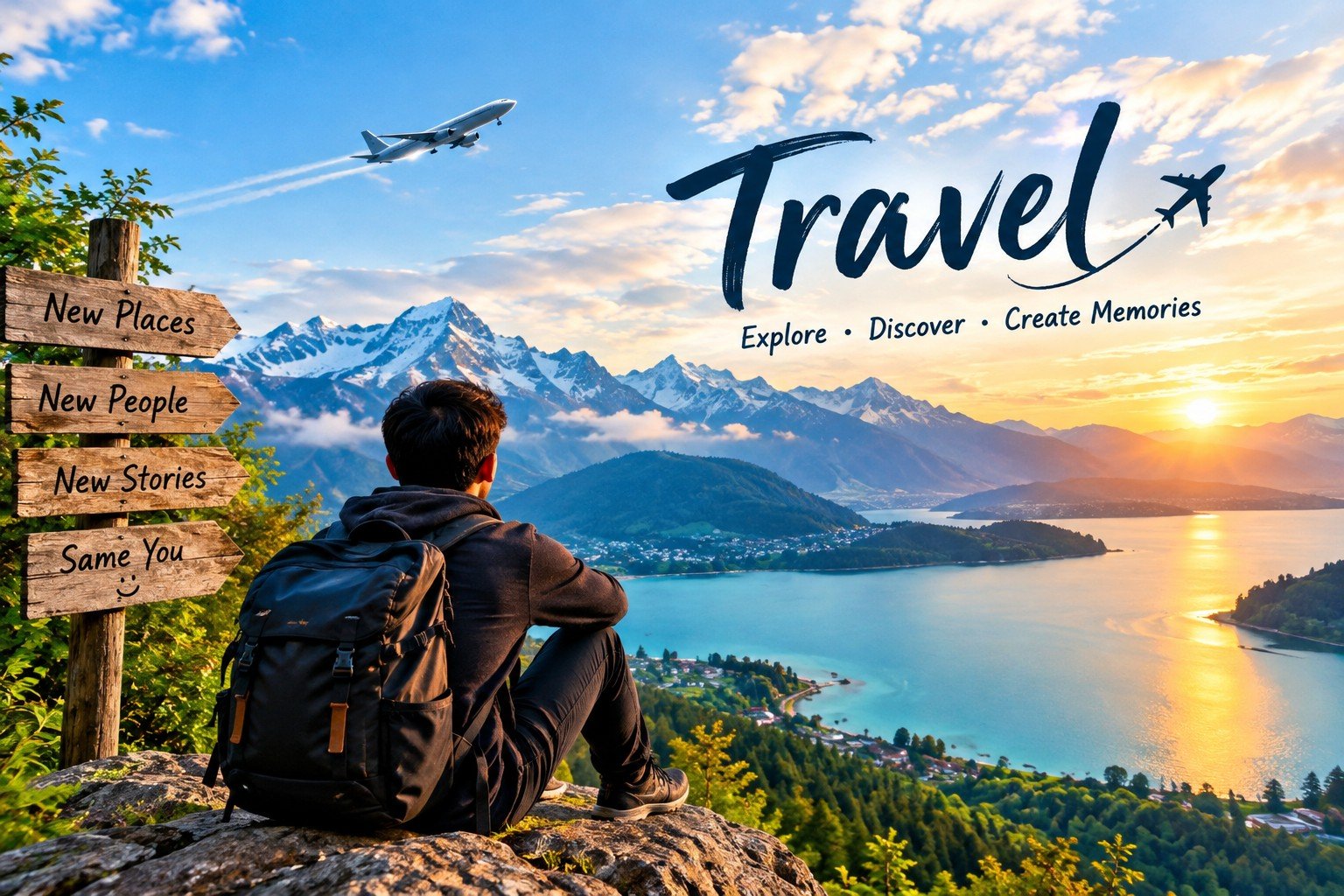
Travel: Exploring the World, Discovering Yourself
Travel is one of the most beautiful experiences in life. It is not simply about moving from one place to another; it is about discovering new places, meeting different people, understanding different cultures, and creating memories that remain with us for years. Whether it is a short trip with family, an adventurous journey with friends, a peaceful vacation alone, or a visit to a completely new country, travelling gives us an opportunity to see the world from a different perspective.
In our daily lives, we often become busy with school, work, responsibilities, technology, and routine activities. After spending many days following the same schedule, travelling can provide a refreshing change. A journey can help us relax our minds, enjoy nature, learn new things, and return home with renewed energy. This is why travel is considered an important part of a balanced and meaningful life.The Meaning and Importance of Travel
Travel means going from one place to another for different purposes such as tourism, education, business, adventure, relaxation, or cultural exploration. People have travelled throughout history. In ancient times, travellers crossed deserts, mountains, rivers, and oceans to discover new lands, trade goods, spread ideas, and learn about other civilizations.
Today, travelling has become easier because of modern transportation. Cars, trains, buses, airplanes, ships, and other forms of transport allow people to cover long distances in much less time. The internet has also changed the way people plan their journeys. Travellers can research destinations, find accommodation, learn about local attractions, and prepare itineraries before leaving home.
However, the real value of travel goes beyond convenience. Travelling teaches lessons that cannot always be learned from books. When we visit a new place, we experience its environment, people, food, language, traditions, and lifestyle directly. These experiences can make us more understanding and open-minded.
Travel and Personal Growth
One of the greatest benefits of travelling is personal growth. A journey often takes us outside our comfort zone. We may have to communicate with unfamiliar people, find our way around a new location, manage our time, make decisions, and deal with unexpected situations.
These experiences can make a person more independent and confident. For example, someone travelling to a new city may initially feel nervous about using public transportation or asking for directions. After successfully managing the journey, the person may become more comfortable handling unfamiliar situations.Travel also teaches patience. Flights can be delayed, roads can become crowded, weather can change, and plans sometimes need to be modified. Instead of becoming frustrated, travellers learn to adapt. This ability to adjust to changing circumstances is useful not only during travel but also in everyday life.
Discovering Different Cultures
Every destination has its own identity. Culture can be seen in traditional clothing, festivals, music, dance, architecture, food, language, art, and everyday customs. Travelling provides an opportunity to experience these cultural differences personally.
India itself is a wonderful example of cultural diversity. Different regions have different languages, cuisines, traditions, landscapes, and lifestyles. A journey from the northern mountains to the southern coast can feel like visiting several different worlds within one country.
Travelling teaches us that there is no single way to live life. People may have different traditions and habits, but they can share common values such as family, friendship, kindness, hospitality, and respect. Understanding this diversity can reduce unnecessary stereotypes and encourage respect for other communities.
The Beauty of Nature
Nature is one of the biggest attractions for travellers. Mountains, forests, beaches, rivers, waterfalls, deserts, lakes, islands, and national parks offer unforgettable experiences.
A morning in the mountains can provide a feeling of peace that is difficult to find in a busy city. Watching waves reach a beach, walking through a forest, seeing a sunset, or looking at a sky filled with stars can remind us of the beauty of the natural world.
Nature-based travel can also encourage people to care about the environment. When travellers see beautiful landscapes and wildlife, they may develop a stronger desire to protect them. Responsible tourism is therefore important. Visitors should avoid littering, damaging plants, disturbing animals, or wasting natural resources.
Adventure and Excitement
For many people, travel is connected with adventure. Hiking, camping, cycling, rafting, skiing, and other outdoor activities can make a journey exciting. Adventure travel can also teach preparation, teamwork, responsibility, and awareness of surroundings.
However, adventure should always be approached responsibly. Travellers should follow local rules, use appropriate safety equipment, respect weather conditions, and take guidance from qualified professionals when an activity requires specialized knowledge. Enjoyment becomes more meaningful when safety is taken seriously.
Travel with Family
Family trips can create some of the most memorable experiences. In everyday life, family members may be busy with their individual responsibilities. A vacation provides an opportunity to spend quality time together.
During a family trip, people may share meals, explore attractions, take photographs, play games, and discuss their experiences. Even small moments, such as laughing together during a long road journey or watching the sunset, can become precious memories.
Family travel can also strengthen relationships. When people experience new places together, they share stories that they can remember long after returning home.
Travelling with Friends
Travelling with friends can be completely different from travelling with family. Friends often enjoy exploring places, trying new food, taking photographs, participating in activities, and creating humorous memories together.
A trip can also teach friends how to cooperate. They may need to decide where to go, how to divide responsibilities, manage a budget, and respect each other's preferences. Sometimes disagreements may happen, but learning to communicate and compromise can strengthen friendships.
The best trips are not necessarily the most expensive ones. A simple road trip, a visit to a nearby town, or a weekend camping experience can be enjoyable when the people and memories are special.
Solo Travel
Solo travel has become increasingly popular because it offers freedom and independence. A person travelling alone can create an itinerary according to personal interests and decide how much time to spend at each destination.
Solo travel can encourage self-confidence because the traveller is responsible for planning and making decisions. It can also provide peaceful time for thinking and reflection.
For younger travellers, especially teenagers, travel should be planned with parents, guardians, or responsible adults, and appropriate safety arrangements should always be followed. Exploring the world is exciting, but personal safety should remain a priority.The Role of Food in Travel
Food is an important part of every journey. Local dishes can tell us a lot about a region's history, climate, agriculture, and culture.
For example, different parts of India are famous for different types of cuisine. Northern India is known for dishes such as various breads and rich gravies, while southern regions are famous for dishes such as dosa and idli. Western and eastern parts of the country also have their own distinctive culinary traditions.
Trying local food can make travel more interesting. However, travellers should consider hygiene, allergies, dietary requirements, and personal health needs when choosing what to eat.
Travel and Education
Travel can be a powerful form of education. Students who visit historical monuments, museums, archaeological sites, science centres, and cultural institutions can understand subjects more deeply.
Reading about history in a textbook provides information, but standing in front of an ancient monument can create a stronger connection with the past. Visiting a museum can make art and history feel more real. Geography also becomes easier to understand when students observe mountains, rivers, coastlines, forests, and different climates in person.
Educational travel can therefore combine learning with enjoyment.
Historical Travel
Many travellers are interested in history. Ancient forts, palaces, temples, monuments, museums, old cities, and archaeological sites help visitors understand how people lived in earlier periods.
India has a vast historical heritage. Places such as Delhi, Agra, Jaipur, Varanasi, Hyderabad, Mumbai, Kolkata, and many other cities contain monuments and traditions connected with different periods of Indian history.
Historical tourism should be respectful. Visitors should follow monument rules, avoid damaging structures, and understand that heritage sites are valuable parts of collective history.Sustainable and Responsible Travel
As tourism grows, protecting destinations becomes increasingly important. Large numbers of visitors can sometimes create waste, traffic, pollution, and pressure on natural resources.
Responsible travellers can help by carrying reusable items, avoiding unnecessary plastic, using water carefully, disposing of waste properly, respecting local communities, and choosing environmentally responsible services when possible.
Travellers should also respect local customs. Appropriate behaviour, clothing, photography practices, and communication can differ from one place to another. Learning basic information about a destination before visiting is a simple way to show respect.
Technology and Modern Travel
Technology has transformed travel. Smartphones allow people to use maps, translation tools, digital tickets, weather information, travel guides, and communication services. Online platforms make it easier to compare transportation and accommodation options.
Photography has also become a major part of modern travel. People capture landscapes, food, architecture, and special moments using their phones or cameras.
However, travellers should not allow technology to replace the actual experience. Sometimes it is important to put the phone away and simply enjoy the surroundings. A beautiful sunset does not need to be experienced only through a camera screen.
Planning a Successful Journey
Good planning can make a trip smoother and more enjoyable. Before travelling, people should research the destination, transportation, weather, accommodation, local rules, important attractions, and approximate expenses.
Creating a basic itinerary is useful, but travellers should also leave some flexibility. A journey does not always need to follow a strict schedule. Sometimes unexpected discoveries become the best part of a trip.
Packing should also be practical. Essential documents, appropriate clothing, medicines if prescribed or normally required, basic toiletries, chargers, and necessary emergency contacts should be considered.
A realistic budget is equally important. Travel costs may include transportation, accommodation, food, entry fees, local travel, shopping, and emergency expenses.
The Emotional Value of Travel
Travel can have a lasting emotional impact. A journey may introduce us to a beautiful landscape, a kind stranger, a fascinating tradition, or an unforgettable experience.
Sometimes people travel because they need a break from routine. A change of environment can provide an opportunity to relax and reflect. Returning home after a trip can also make ordinary things feel fresh again.
Travel reminds us that the world is much larger than our daily surroundings. It encourages curiosity and helps us appreciate both differences and similarities among people.
Challenges of Travel
Although travelling can be enjoyable, it is not always perfect. Long journeys can be tiring. Crowded places, traffic, unexpected expenses, changes in weather, language barriers, and delays can create difficulties.
These challenges are part of the experience. Travellers can reduce problems through preparation, but they should also remain flexible. Carrying important information, keeping emergency contacts available, and following local safety guidance can help.
The ability to remain calm when plans change is one of the valuable lessons travel can teach.
The Future of Travel
The future of travel is likely to involve even more technology and greater attention to sustainability. Digital travel services, improved transportation, better navigation systems, and environmentally conscious tourism may make journeys more efficient.
At the same time, travellers are becoming more interested in meaningful experiences rather than simply visiting famous attractions. Cultural experiences, nature conservation, local communities, educational trips, and responsible tourism are becoming important aspects of modern travel.The future of tourism should aim to balance exploration with protection. Beautiful destinations should remain beautiful for future generations.
Conclusion
Travel is much more than visiting new places. It is a journey of discovery, learning, growth, and memories. It introduces us to different cultures, landscapes, foods, traditions, and ways of life. It can make us more independent, adaptable, curious, and respectful toward the world around us.
Whether it is a trip across the country or a simple visit to a nearby destination, every journey has something to teach. The most valuable souvenir from travel is often not something purchased from a shop but a memory, a lesson, a friendship, or a new perspective.
In a world where life can become repetitive and stressful, travelling gives us the chance to pause, explore, and experience something different. It reminds us that there is always more to discover beyond our familiar surroundings. With responsible planning, respect for people and nature, and an open mind, travel can become one of the most rewarding experiences of life.